Medien zum Download.

How to Choose Chocolate Equipment for Your Business?

Choosing Chocolate Equipment is a practical decision that shapes product quality, labor needs, and daily production. A small tempering machine may suit a shop making seasonal bonbons, while a larger line may better serve steady wholesale orders. The right choice depends on what you make, how much you produce, and the space available. Start with your real production goals, not the largest machine in a catalog.

Look closely at the process. A melter, tempering machine, enrober, and cooling tunnel each solve different problems. Check batch capacity, temperature control, cleaning access, power requirements, and the time needed for changeovers. Ask suppliers for specifications and demonstrations using products similar to yours. A glossy brochure is not enough. Chocolate behaves differently across recipes, room conditions, and workflows, so equipment should be tested against your actual needs.

Costs deserve careful attention. Purchase price matters, but so do installation, maintenance, spare parts, and staff training. A machine that saves labor may still be a poor fit if repairs are difficult to arrange. Request clear warranty terms and confirm local service availability before committing. I would also leave room in the plan for production growth, though forecasting demand is imperfect. It often is. A useful selection balances current capacity with flexibility, rather than paying for features that may never be used. This guide will help compare equipment types, evaluate suppliers, and build a shortlist based on measurable requirements. The final choice should make consistent chocolate easier to produce, not add complexity to an already busy workday.
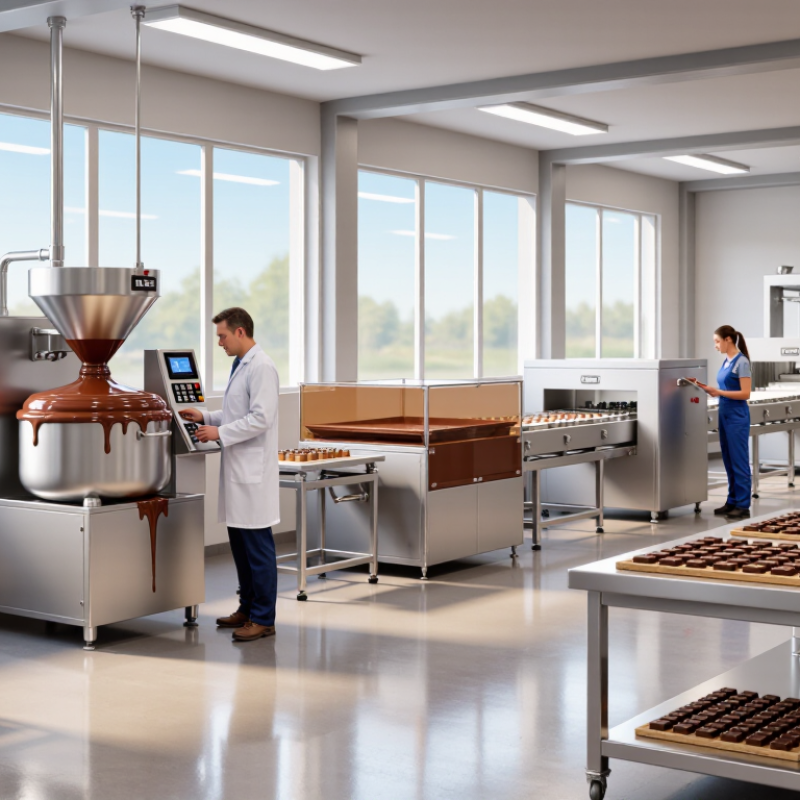
How to Choose Chocolate Equipment for Your Business?

Define Your Chocolate Products and Production Goals

Before choosing chocolate equipment, define exactly what you plan to make. A shop producing molded bars needs different tools from one making truffles, filled pralines, or chocolate-coated snacks. List each product’s shape, size, filling, and finish. A thin shell around a soft center, for example, calls for controlled tempering and careful depositing. Small details matter.

Estimate realistic production goals, too. How many kilograms do you expect to process per shift, and how much space can you spare for cooling, storage, and cleaning? A compact melter may suit a new kitchen, but it can slow work when orders grow. A larger machine is not automatically better. We once underestimated setup time; the planned daily output looked fine on paper, but changeovers took longer than expected.

Tips: Make a simple batch sheet. Record batch size, heating and cooling time, labor, and rejected pieces for several trial runs. Include seasonal demand, not just your busiest week. Leave room for adjustment. Your first estimate may be wrong, and that is useful information. Compare equipment by the tasks it must perform, the products it can handle, and how easily staff can clean and operate it.
Identify the Equipment Needed for Each Production Stage

How to Choose Chocolate Equipment for Your Business?

Equipment should follow the production stage, not the other way around. Start with receiving, cleaning, and storing cocoa, sugar, milk powder, and inclusions. Use calibrated scales, dust-controlled unloading, magnets, sifters, and temperature-stable storage. Cocoa absorbs moisture and odors easily. Small storage mistakes can damage an otherwise good recipe.

The processing line changes with the product. Cocoa liquor requires grinding equipment, while smooth chocolate needs refining and conching. A batch conche may suit seasonal production, but continuous systems offer stronger capacity control. The International Cocoa Organization estimated global cocoa grindings at about 4.855 million tonnes in its 2023/24 forecast. That volume shows the importance of reliable particle-size control and efficient processing. Tempering equipment must manage heating, cooling, and agitation precisely. Molding machines then define weight, shape, and release performance.

Do not overlook cooling and packaging. A cooling tunnel needs stable airflow and humidity control, while packaging equipment should match bars, pralines, or filled products. PMMI’s 2023 packaging industry research identified labor availability and automation as significant operational concerns. Simple sensors can monitor temperature, speed, and product loss. Useful data.

In practice, many new producers buy oversized equipment too early. I have seen this create long changeovers, unused capacity, and difficult cleaning routines. A smaller modular line may be safer. The weak point is usually underestimated maintenance time. Ask for sanitation access, spare-part lead times, training requirements, and documented performance tests before purchasing.

Match Equipment Capacity to Your Business Scale

How to Choose Chocolate Equipment for Your Business?

Choosing chocolate equipment starts with output, not appearance or the lowest quoted price. A small workshop may need a 10-kilogram melter and a compact tempering unit. This setup suits seasonal orders, limited staff, and frequent recipe changes. A growing production room may require 30 to 60 kilograms per hour. Capacity should reflect realistic daily demand, not an optimistic sales forecast. Leave room for cleaning, loading, cooling, and short equipment pauses. Machines rarely run at their advertised maximum all day.

Measure your busiest two-hour period. Then compare it with the machine’s usable hourly capacity. If you need 40 kilograms during that window, a 20-kilogram hourly unit will create delays. A larger machine is not always wiser. It may waste energy, occupy valuable floor space, and make small batches harder to control. Match the hopper, molds, cooling cabinet, and packaging table as well. One slow stage can restrict the entire line. Map each step with actual timing before purchasing.

I once underestimated washing time by nearly an hour. The machine performed well, but the schedule still failed. That mistake changed how I evaluate capacity. Ask operators to test a sample batch, record temperatures, and note handling effort. Check whether future expansion requires another unit or a full replacement. Choose measurable capacity, accessible parts, and clear operating records. A modest machine can be the safer investment when demand is still uncertain. Recheck the plan every quarter.

How to Choose Chocolate Equipment for Your Business?

Match equipment capacity to your business scale by comparing typical tempering throughput and batch size requirements.

Planning benchmarks: small businesses often use 10–30 kg batches, growing businesses 50–100 kg batches, and industrial operations 200–500 kg batches. Actual capacity depends on product type, recipe, operating hours, and workflow.

Compare Key Features, Materials, and Safety Standards

How to Choose Chocolate Equipment for Your Business?

Choosing chocolate equipment requires more than comparing capacity and price. In a working kitchen, I examine how quickly a machine heats, cools, cleans, and recovers between batches. Stable temperature control matters because a small fluctuation can dull shine or create uneven texture. Ask for test results, operating instructions, and maintenance records before purchasing. Claims alone are not enough.

Materials deserve close attention. Food-contact surfaces should resist corrosion, scratching, and chocolate residue. Stainless steel is usually practical, but its grade and surface finish still matter. Seams should be smooth, with few hidden areas where sugar or cocoa butter can collect. Removable parts simplify sanitation. They also reduce cleaning time. I once preferred a cheaper machine with more features, but its narrow internal corners became frustrating during daily washing.

Safety standards should be checked as carefully as performance. Look for guarded moving parts, emergency stops, insulated hot surfaces, overload protection, and clear temperature alarms. Electrical components should meet applicable local requirements, supported by accessible conformity documents. Ask whether operators receive training and whether replacement parts remain available. Independent inspection can reveal weaknesses that a sales demonstration misses. No checklist is perfect. Leave room for practical judgment, especially when noise, floor space, ventilation, and staff habits affect real use. A reliable supplier should answer technical questions directly, not hide behind polished promises.

Assess Costs, Maintenance, and Supplier Support

How to Choose Chocolate Equipment for Your Business?

Equipment costs extend far beyond the purchase price. Calculate output, energy use, installation, training, and spare parts before comparing machines. A tempering unit may appear affordable, yet poor temperature control can increase chocolate waste. Ask for documented capacity under real production conditions, not ideal laboratory figures. Start with the numbers. Your daily batch size matters.

Maintenance should be practical for your staff. Check whether operators can remove covers, clean contact surfaces, and inspect pumps without special tools. Request a maintenance schedule with daily, weekly, and annual tasks. Stainless steel parts, accessible seals, and clear error codes can reduce downtime. I have found that small cleaning delays often become expensive production problems. Still, a simple design is not automatically reliable. Review service records, warranty limits, and the expected life of heating elements.

Supplier support deserves the same attention as technical specifications. Ask how quickly they answer urgent calls and whether local technicians are available. Confirm training methods, spare-part stock, response times, and remote troubleshooting options. A written service agreement is safer than friendly promises. Speak with existing users if possible, especially businesses with similar production volumes. Be careful with impressive demonstrations. They may not show cleaning time, repair access, or performance after months of use. Leave room in your budget for mistakes, because the first equipment choice is rarely perfect.

How to Choose Chocolate Equipment for Your Business? - Assess Costs, Maintenance, and Supplier Support
Equipment Typical Purchase Cost (USD) Typical Production Range Maintenance Considerations Supplier Support to Confirm Best Fit
Chocolate melter $500–$5,000 Approximately 5–50 kg holding capacity Clean food-contact surfaces after use; inspect thermostats, heating elements, and seals. Avoid overheating chocolate. Operating and cleaning instructions, electrical troubleshooting, and availability of replacement thermostats and seals. Small kitchens, confectionery shops, and batch production.
Tabletop tempering machine $2,000–$10,000 Approximately 5–30 kg per hour, depending on model and recipe Remove chocolate residue regularly; check temperature probes, augers, and drive components. Follow the maker’s cleaning procedure. Setup guidance, tempering training, warranty terms, and access to probes, motors, and other wear parts. Small businesses producing bars, truffles, and dipped products.
Continuous tempering machine $10,000–$60,000 Commonly around 30–300 kg per hour Requires scheduled cleaning and inspection of pumps, scrapers, augers, sensors, and cooling components. Commissioning, operator training, remote or on-site troubleshooting, service response times, and spare-parts lead times. Growing producers with regular, higher-volume output.
Chocolate enrober $8,000–$50,000 Varies widely; compact units may process tens of kilograms per hour Clean the belt, curtain, blower, and chocolate-contact parts; inspect belt tracking and vibration components. Installation guidance, belt and curtain replacement support, line-integration advice, and cleaning documentation. Businesses coating biscuits, bars, centers, or snack products.
Cooling tunnel $15,000–$100,000+ Depends on tunnel length, belt width, cooling capacity, and line speed Keep evaporator coils and air paths clean; check belt alignment, refrigeration performance, and temperature controls. Refrigeration service availability, commissioning, controls support, and access to compatible belts and electrical parts. Producers needing consistent cooling for an enrobing or molding line.
Chocolate molding line $20,000–$150,000+ Output depends on mold format, number of stations, and operating speed Clean molds and dosing components; inspect vibration systems, pumps, and mold-handling mechanisms. Mold compatibility advice, installation and training, technical drawings, and parts support for pumps and controls. Businesses producing molded bars, pralines, or filled pieces at scale.
Estimated annual maintenance allowance Planning allowance: approximately 2%–5% of equipment purchase value Not a production-capacity figure Actual costs vary with use, cleaning requirements, operating conditions, labor rates, and parts availability. Ask for a written preventive-maintenance schedule, service rates, warranty exclusions, and recommended spare-parts list. Useful for comparing total ownership cost across equipment options.
Cost and output figures are broad planning estimates in USD, not supplier quotations. Actual prices and capacities vary by configuration, region, installation needs, and product requirements. Request comparable written quotations and confirm food-contact materials, electrical requirements, warranty coverage, and local service availability before purchasing.