How to Improve Print Inspection for Quality Control?
Print Inspection has become a critical aspect of quality control in the printing industry. According to Dr. Emily Carter, a renowned expert in this field, "Effective print inspection leads to higher customer satisfaction." This statement underscores the importance of maintaining high standards in print quality, which can directly affect brand reputation.
Many companies struggle with inconsistencies in their print output. Flaws such as color mismatches or misalignments often go unnoticed during production. These oversights can lead to significant losses and customer dissatisfaction. Implementing advanced print inspection technologies, like AI and machine vision, can greatly enhance the detection of such issues. These tools provide real-time feedback, enabling rapid adjustments.
However, reliance solely on automated systems may lead to complacency. Human oversight is still vital in identifying subtle defects that machines might overlook. Continuous training for staff is essential to balance technology with human expertise. The evolving nature of print inspection demands ongoing reflection and adaptation in practices to achieve the best results.
Best Practices in Print Inspection for Enhancing Quality Control
Print inspection is crucial for maintaining quality control in the manufacturing process. According to the 2023 Quality Control Report, companies that implement robust print inspection systems can reduce errors by up to 30%. This highlights the importance of adopting best practices in print inspection.
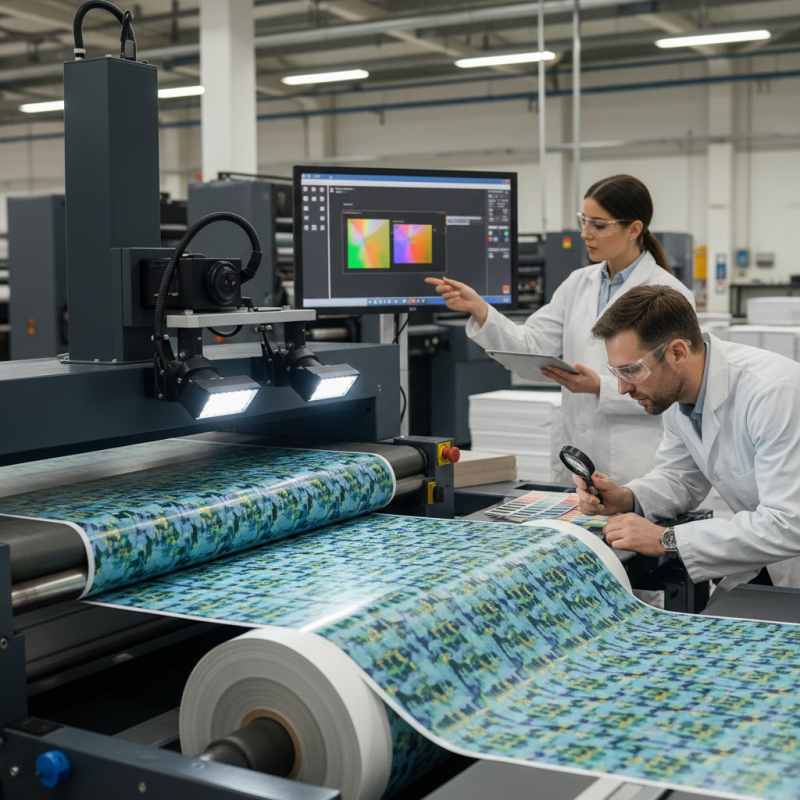
Utilizing advanced scanning technology ensures precise evaluation of prints. High-resolution cameras can detect defects invisible to the naked eye. Employing automated systems reduces human error. However, reliance on machinery can sometimes overlook subtle flaws. Regular training for staff is essential to complement technology, emphasizing the human touch in quality assessment.
Monitoring production metrics is another essential practice. Consistent evaluation aids in identifying patterns of defects over time. Yet, many facilities struggle with assimilation of this data for actionable insights. The challenge often lies in integrating varied systems within a single framework. By fostering collaboration between teams, companies can enhance their quality control processes. Ultimately, striking the right balance between technology and human expertise is vital for effective print inspection.
Integrating Automated Technologies in Print Quality Inspection Processes
Integrating automated technologies in print quality inspection can significantly enhance the efficiency of quality control processes. Automation allows for real-time monitoring, reducing human error and increasing accuracy. By using high-resolution cameras and advanced algorithms, companies can detect defects that might be invisible to the human eye. This technological shift assists in maintaining high standards in print production.
**Tip:** Consider implementing machine learning models that adapt over time. They can learn from past inspections and improve accuracy. Regular updates are essential.
However, simply adopting automation does not guarantee flawless results. Some prints might still require manual inspection. Staff should be trained to understand both automated systems and human oversight. Balancing the two can be challenging but necessary.
**Tip:** Make sure your team has time for feedback sessions. Identify issues that automation may miss. This practice helps refine processes and improve overall quality.
Understanding Industry Standards for Print Quality Control Measures
In the realm of print quality control, understanding industry standards is crucial. These standards define the acceptable levels of quality. Whether it’s color consistency or print clarity, knowing these benchmarks is essential for any company. Many businesses often overlook the specifics of these standards. They may think general quality is enough. However, attention to detail is what sets successful companies apart.
Common challenges arise during print inspection. Equipment malfunctions can lead to inconsistencies. Poor lighting conditions might obscure defects. Employee training often falls short, creating errors during inspection. Companies must address these issues to enhance inspection processes. Implementing regular training sessions can bridge this gap. Yet, not all organizations prioritize ongoing education. This can lead to a disconnect in quality control efforts.
Another vital aspect is to maintain accurate documentation. Recording inspection results creates a reliable history. Yet, many teams find it cumbersome. Ignoring such records can lead to repeated mistakes in production. It's important to continuously review these documents. Reflection on past inspections can guide future improvements. Embracing transparency is key to a robust quality control system. Recognizing where improvements are needed is the first step towards excellence.
Print Quality Control Measures Overview
Utilizing Data Analytics to Improve Print Inspection Accuracy and Efficiency
Data analytics is transforming print inspection in quality control. By harnessing data, companies can enhance accuracy. This shift allows for quicker identification of defects. Advanced algorithms analyze patterns that human inspectors might miss. This creates a more reliable inspection process.
However, relying solely on data has drawbacks. Some anomalies may go unnoticed. Human oversight still plays a crucial role. Inspectors can spot nuances that data might not capture. A balanced approach should incorporate both technology and human experience.
To improve overall efficiency, companies should invest in training. Staff must understand data insights. This training helps bridge the gap between data and real-world application. Continuous feedback loops are vital. Regular assessments of the inspection process enable iterative improvement. Finding this balance remains a challenge, but it's essential for quality control excellence.
Training Strategies for Staff in Print Quality Control and Inspection Techniques
Effective training strategies for staff in print quality control can significantly enhance inspection techniques. One vital approach is hands-on training. Employees should engage in real-world inspection scenarios. This allows them to apply theoretical knowledge to practical situations. Regular workshops can also reinforce the learning experience. These sessions can include discussions on common defects and how to identify them.
Moreover, fostering a culture of continuous improvement is essential. Encourage staff to reflect on their inspection methods regularly. This could mean assessing past errors or considering feedback from peers. Creating an open environment for discussion can lead to better insights. Employees are more likely to notice patterns in defects when they share experiences.
Implementing technology in training sessions can also be beneficial. Visual aids, like videos and interactive software, can enhance understanding. However, over-reliance on technology might lead to overlooking important details. Staff must find a balance between using tools and honing their observation skills. Engaging in mock inspections can help bridge this gap.