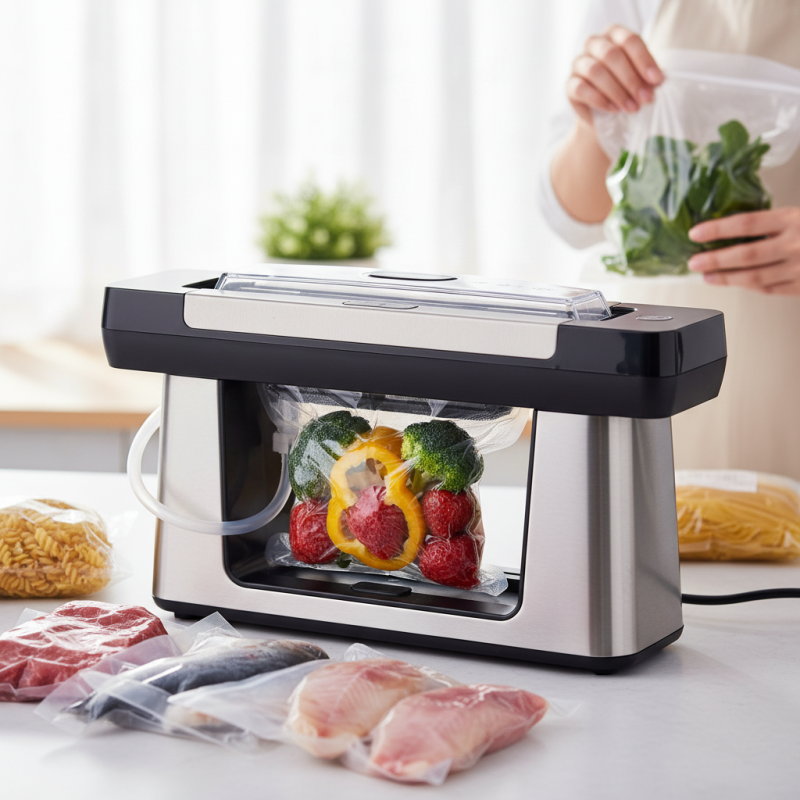
What is a Food Vacuum Sealer and How Does it Work?
A Food Vacuum Sealer is a valuable kitchen tool. It helps keep food fresh by removing air from packaging. This simple process greatly extends the shelf life of various foods.
Many people underestimate its usefulness. Sealing fruits and vegetables can prevent spoilage and waste. It’s effective for meats and fish too. The sealer protects against freezer burn.
However, not everyone knows how to use it properly. Some may struggle with vacuum settings or seal quality. These challenges can lead to wasted food. Learning to use a Food Vacuum Sealer efficiently can be rewarding. It saves money and reduces waste. Achieving that perfection requires practice.
What is a Food Vacuum Sealer?
A food vacuum sealer is a kitchen device that removes air from packaging. This process prevents spoilage and extends shelf life. Industry studies show that vacuum-sealed food can last 3-5 times longer than traditionally stored items. This tool is especially beneficial for storing meats, vegetables, and dry goods.
When using a vacuum sealer, it’s important to choose the right bag. Not all bags are suitable. Some may allow air to seep in. Check for compatibility to ensure the best results. Proper sealing also matters. If the seal isn't secure, the food may spoil faster.
Tips: Always clean the sealing area before use. Dust and residue can affect the seal. Keep the appliance dry for effective operation. Remember that some foods, like soft fruits, may crush during vacuum sealing. Use the pulse option if available. This gives more control in achieving the desired texture.
The Science Behind Vacuum Sealing Technology
Vacuum sealing is a fascinating process that involves removing air from a package. This technique helps preserve food by preventing oxidation and microbial growth. The science behind it is quite simple yet effective. When air is removed, the food remains fresher for longer, maintaining its texture and flavor.
The vacuum sealers work through a pump that creates a low-pressure environment. This removes oxygen, which is essential for bacteria to thrive. After sealing, food is often stored in the refrigerator or freezer. This method extends shelf life significantly, reducing waste. However, one must be cautious with vacuum-sealed foods. Improper sealing can lead to spoilage.
While vacuum sealing is a great option, it has limitations. Not all foods seal well; liquids and soft items can be tricky. Soggy contents may ruin the seal, leading to air exposure. This raises questions about the effectiveness of the method. Transparent packaging might be necessary for visual checks. Ultimately, vacuum sealing is a wonderful tool, but it requires attention and care.
Vacuum Sealing Technology Comparison
This chart compares three different vacuum sealers based on four key dimensions: Preservation Duration, Food Freshness Rating, Material Cost, and Power Consumption. The data shows varying performance and cost implications, helping users to understand the potential effectiveness of vacuum sealing technology.
How Food Vacuum Sealers Operate Step-by-Step
Food vacuum sealers are powerful devices designed to extend the freshness of food. They operate by removing air from specially designed bags. This process significantly reduces spoilage and freezer burn. According to a report by the Food Marketing Institute, vacuum-sealed food can last up to five times longer than traditionally stored food.
The operation begins with placing food in a bag. The sealer aligns the bag's opening under the sealing bar. Once closed, the machine activates a vacuum pump, which eliminates air. The process takes only a few minutes. This quick action is vital for retaining the food's nutrients and flavor. However, not all foods seal well. Tough, fibrous items like broccoli may not achieve a complete seal.
After vacuuming, the machine automatically seals the bag. A heat strip melts the bag edges together, creating an airtight environment. Some users find minor issues here. Over-sealing can lead to bag bursts during the freezing process. Proper technique and knowledge of food characteristics are crucial. With some practice, anyone can master vacuum sealing.
Benefits of Using a Food Vacuum Sealer
A food vacuum sealer is a useful kitchen tool. It removes air from bags to preserve food. This process slows down spoilage and keeps food fresh longer. Many people enjoy the benefits of vacuum sealing.
One significant advantage is extended shelf life. Vacuum-sealed items can last months or even years in the freezer. This means less food waste. You can prepare meals in advance and store them safely. Plus, you save money by buying in bulk and sealing portions.
Tips for using a vacuum sealer: Ensure bags are clean and dry before sealing. Press the air out firmly for the best results. Experiment with different foods to see what works. Some items may need special treatment.
Another benefit is preventing freezer burn. When air contacts food, it can cause freezer burn. This negatively affects texture and flavor. Vacuum sealing cuts out the air and helps maintain quality. Remember, not all foods seal the same way. It may take some trial and error.
Common Uses and Applications of Vacuum Sealing Food
Vacuum sealing food is becoming increasingly popular among consumers. It offers a way to extend the shelf life of food. According to a report by the Food Preservation Society, vacuum sealing can prolong the freshness of vegetables by up to five times. This is especially useful for those who buy in bulk or want to store seasonal produce.
Common applications of vacuum sealing include preparing meals ahead of time. Meal prep simplifies cooking during busy weeks. By sealing meals, you can avoid food waste. Many families notice a 30% decrease in food waste when using vacuum-sealing methods. It's easy to see how this can save money over time.
However, not everything is perfect. Improper sealing can lead to freezer burn or spoilage. Some foods don’t seal well due to moisture. On occasion, users may find that the vacuum loses effectiveness over time. These challenges require careful attention to detail when using a vacuum sealer. Users must be aware of the limitations while enjoying the benefits of preserved freshness.