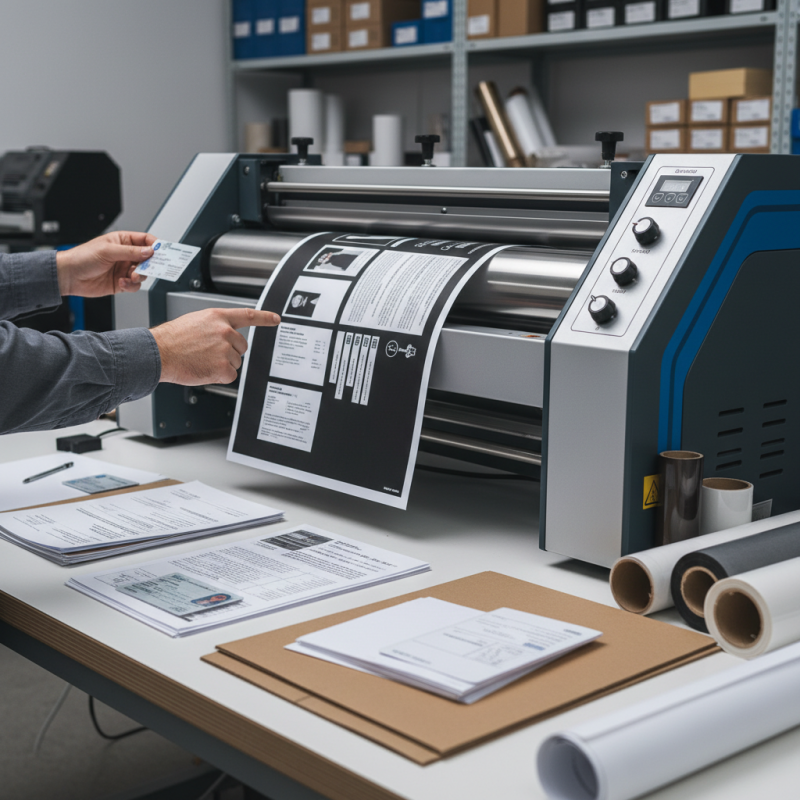
How to Choose the Best Roll Lamination Machine for Your Needs
Choosing the right Roll Lamination Machine is crucial for any business engaged in laminating processes. With various options available, it can be overwhelming. Understanding your specific needs is key. Are you laminating small items or large posters?
Evaluating features like speed, size, and ease of use is essential. A machine that's too fast may not suit smaller projects. On the other hand, a slower machine might limit efficiency. Look for something that balances these aspects based on your unique demands.
Additionally, consider the material compatibility. Not all Roll Lamination Machines work with every type of film. Some may struggle with thickness variations or adhesive types. Take time to reflect on your daily tasks and how a new machine fits into that workflow. Each choice impacts productivity and quality.
Understanding Roll Lamination Machines: Types and Functions
Roll lamination machines play a pivotal role in many industries. They ensure crucial documents are protected and presentable. Different types exist, each serving unique functions. Cold lamination machines utilize pressure without heat, making them suitable for sensitive materials. In contrast, thermal lamination machines melt adhesive, creating a robust bond. According to industry reports, over 60% of users prefer thermal lamination due to its durability.
Understanding the specific needs of your projects is essential. For high-volume tasks, consider a faster, automatic machine. Manual machines may suit lower demand but require more operator intervention. A recent study noted that operations using automated roll lamination saw a 30% boost in efficiency. However, they may come with a learning curve, potentially slowing initial output.
When assessing functionality, think about features that save time. Integrated trimmers can reduce finishing time. However, they might complicate maintenance. Some users find this a drawback. Cost is another significant factor. While prices vary widely, investing in quality often pays off in the long run. A poorly chosen machine can lead to significant operational challenges. Ultimately, evaluating each type's pros and cons will direct you towards the right choice.
Comparison of Different Types of Roll Lamination Machines
Key Factors to Consider When Choosing a Roll Lamination Machine
Choosing the right roll lamination machine is crucial for your production needs. Several key factors play a role in that decision. Capacity is one of them. You need to assess how much volume you will laminate. Small projects may only require a compact model, while larger operations call for industrial-grade machines.
The ease of use is another important consideration. Some machines come with complex settings. A straightforward interface can save you time and frustration. Check if the machine offers adjustable temperature and speed controls. Flexibility in these settings allows for a variety of materials and finishes.
Don't forget about maintenance needs. Some machines may require frequent servicing, which can be a hassle. Look for options that have easy-to-clean surfaces and accessible components. Evaluating the warranty and support is essential, too. A good warranty reflects reliability, but a lack of support can lead to issues. Think ahead about your specific needs. Choosing a machine that fits perfectly may take time and careful thought.
Assessing the Capacity and Size Requirements for Your Projects
When evaluating roll lamination machines, capacity and size are crucial. The right machine must accommodate your project's specific requirements. Industry reports indicate that 70% of businesses underestimate the size needed for their production runs. This can lead to bottlenecks, impacting overall efficiency.
Consider your maximum output. If you often process large volumes, opt for machines with higher throughput. For instance, a unit handling upwards of 30 meters per minute might be necessary for busy operations. Smaller projects could benefit from machines that provide flexible size options, allowing for a range of lamination sizes.
Evaluate your available workspace too. Many facilities overlook this factor. Machines need adequate space not just for operation, but also for maintenance. This can lead to operational delays. Accurate measurements ensure that the chosen machine fits seamlessly into your workflow. Ultimately, aligning capacity and size with project demands can significantly enhance productivity and reduce waste.
Evaluating Price, Warranty, and Support Options for Your Needs
When choosing a roll lamination machine, consider the price carefully. Prices vary widely based on features and capabilities. Some machines offer basic functions at a lower cost. Others come with advanced capabilities but may stretch your budget. Look for a price point that aligns with your needs and doesn’t lead to overextension.
Warranty options are another critical aspect. A solid warranty can provide peace of mind. It indicates the manufacturer’s confidence in their product. Some warranties cover only parts, while others include labor. Reviewing the fine print helps you understand what is and isn’t covered. Ensure the warranty period is reasonable and extends beyond the initial purchase.
Support options also play a significant role. Consider whether customer service is easily accessible. Some manufacturers offer online support, while others provide dedicated phone lines. Fast and effective support can save you time and frustration. Look for resources like manuals or troubleshooting guides. This can mitigate future issues. Selecting the right machine requires careful evaluation of these elements.
How to Choose the Best Roll Lamination Machine for Your Needs
| Machine Model | Price (USD) | Max Laminating Width (inches) | Warranty (Years) | Customer Support Options |
| Model A | $1,200 | 25 | 2 | Phone & Email Support |
| Model B | $1,500 | 30 | 3 | 24/7 Chat Support |
| Model C | $980 | 20 | 1 | Email Support |
| Model D | $2,300 | 35 | 5 | Onsite & Phone Support |
| Model E | $1,700 | 28 | 4 | Email & Phone Support |
Comparing Popular Brands and Models in the Market Today
Choosing the right roll lamination machine can be challenging. The market offers various models, each with unique features. Understanding what suits your needs is crucial. According to industry reports, the demand for roll lamination machines is expected to grow by 5% annually. This highlights the importance of selecting the right equipment.
Different brands present various options, which can be confusing. Some machines excel in speed, while others are noted for their durability. An ideal choice balances performance and cost. A report from the Print Industries of America indicates that many users prioritize versatility over other features. This means a machine that can handle multiple media types might be more valuable than a faster model.
Tip: Before purchasing, assess the volume of work you'll be doing. If you need to laminate large batches often, a model with a higher throughput is advisable.
Tip: Consider maintenance costs. Some machines might be cheaper upfront, but repairs can add up quickly.
Not every model will meet all needs. Some machines may underperform in specific applications. Checking user reviews can offer insights. Remember, it’s essential to align your choice with your operational requirements to avoid potential pitfalls.